
Newcastle City Council: Achieving an ambitious Net Zero emission target through distributed solar assets
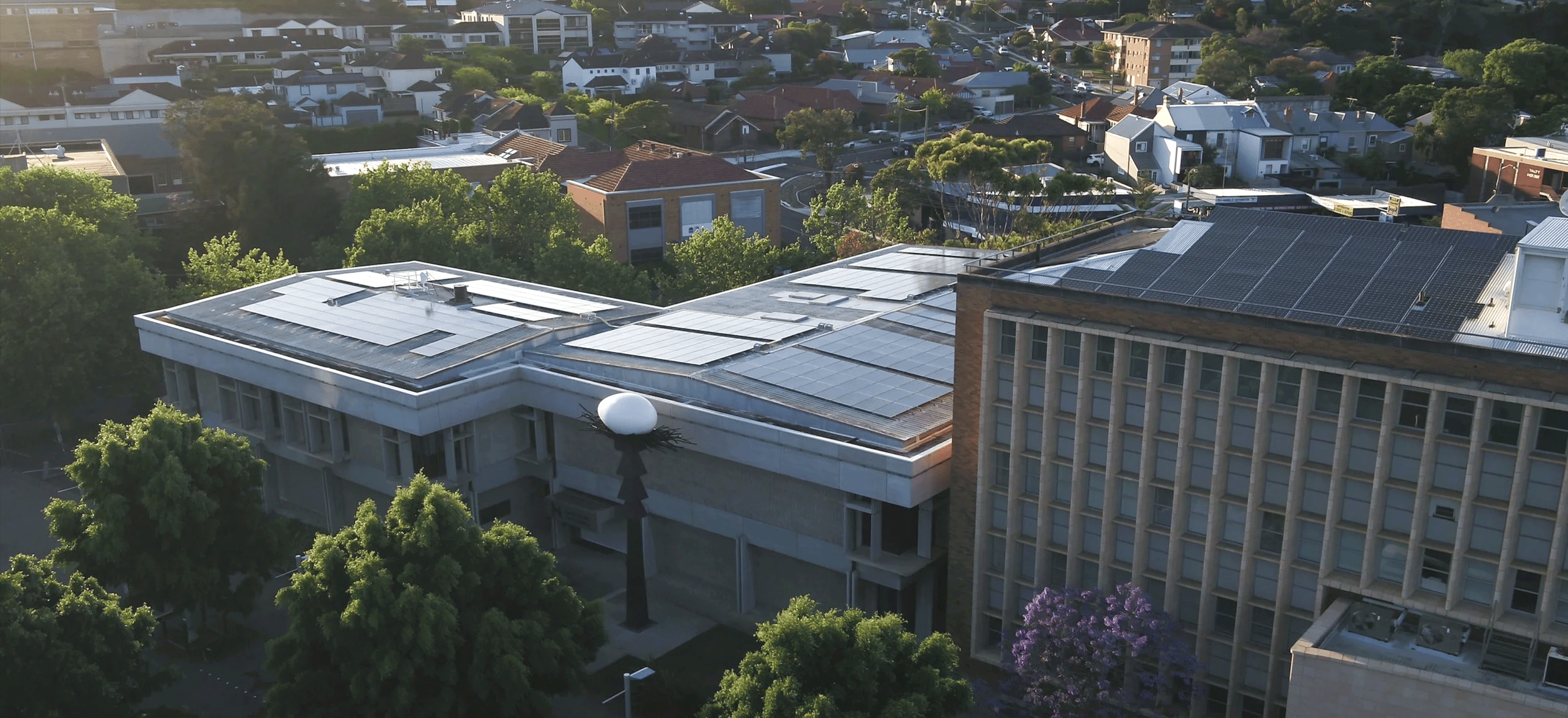
Rooftop solar system installed on Newcastle’s Art Gallery
Executive Summary
Founded in 1938, Newcastle City Council (NCC) is the second largest local government area outside Greater Sydney. Its residential population is forecast to grow to more than 202,000 by 2041. The council manages a large network of buildings and facilities that its residents use.
Similar to many councils across Australia, NCC faces cost pressures due to rising electricity bills. To remain cost effective, the council has invested in renewable energy to power a number of its properties as part of a wider strategy to reduce reliance on grid electricity.
Along with NCC’s commitment to sustainability, it plans to reach Net Zero Emissions for its operations by 2030. This includes a 20% reduction in electricity use against its FY 2019/20 consumption. Meeting this target requires greater adoption of renewable energy.
Challenges
Managing a large and distributed portfolio of solar assets
NCC started to roll out a wide range of Distributed Energy Resources (DER) on council owned properties in 2017. It had 11 sites with a total capacity of over 400 kW that are powered by solar. This included rooftop solar systems installed on buildings such as the City Library, City Admin Centre and Newcastle Museum. At the Number 2 Sportsgrounds, batteries have been installed to optimise the use of solar generated at these locations.
With electrification being a priority for NCC, the council installed a Schneider Electric and Tritium EV public charging station for five vehicles at Number 2 Sportsground and a Schneider Electric EV charging station for five vehicles at the City Administration Centre for the council’s EV fleet.
Managing this diverse portfolio made real-time performance data essential for three reasons
Identifying underperforming assets requiring maintenance
Tracking overall portfolio performance
Reporting solar offset against grid electricity
Because installations occurred progressively over several years, NCC ended up with equipment from multiple manufacturers: solar inverters from SolarEdge and SMA; battery inverters from LS Energy Solutions Powerbrick, Victron Energy and Batrium (Battery Management System); plus smart meters and gateways from Schneider Electric, Enphase Energy and Victron Energy.
Like many local governments and organisations that have progressively deployed Distributed Energy Resources (DER) across multiple sites, NCC could not standardise on a single brand or supplier. This lack of standardisation is common when assets are installed incrementally over several years using different contractors and technologies available at the time.
The consequence was significant operational complexity: each manufacturer provided its own proprietary software platform with different data formats, dashboards, and reporting methods. As a result, collecting, consolidating, and analysing performance data from the entire portfolio of solar, battery, and EV charging assets across numerous locations became highly time consuming and resource intensive for council staff.
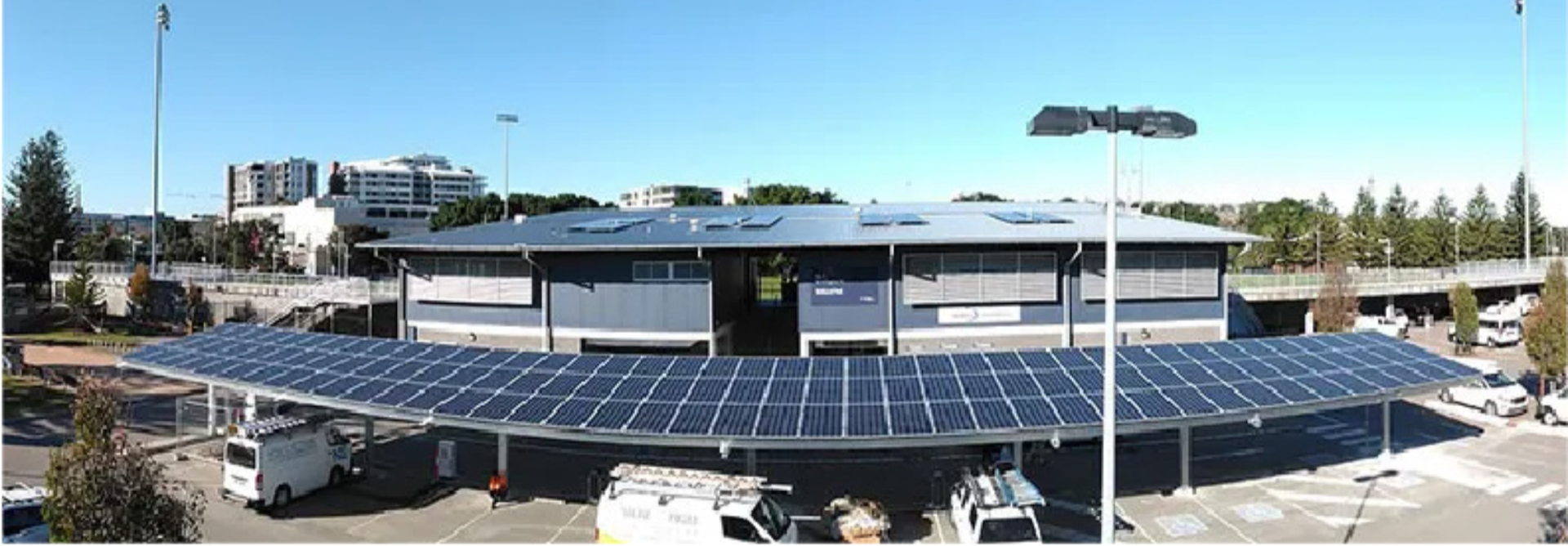
Solar PV on No.2 Sportsground
Solution
NCC selected SwitchDin to provide an integrated real time solution that delivers unified data for its full distributed energy resource portfolio.
SwitchDin Droplet controllers act as communication gateways and smart energy managers. NCC now manages behind the meter solar systems, batteries and key loads across 11 sites. The Droplets automatically upload data through Wi-Fi or mobile internet to Stormcloud which is SwitchDin’s secure digital platform that connects distributed energy resources from anywhere on the grid.
Stormcloud allows NCC to connect, control and communicate with all distributed energy resources regardless of device brand. NCC uses custom dashboards within Stormcloud to access granular site performance data and to aggregate all 11 locations into a single view.
“Solar assets across the 11 sites reduced NCC’s annual energy bill by approximately $230,000 in 2021.”
Available data includes solar production, consumption, battery charge or discharge and electricity import or export. NCC relies on Stormcloud for asset reporting and for insights that assist with planning future distributed energy resource investment.
NCC’s investment in rooftop solar, batteries and EV charging infrastructure has delivered dual benefits: lower operating costs and a reduced reliance on grid electricity in response to the climate crisis.
Another key factor in selecting SwitchDin was the desire to support an Australian technology provider based in Newcastle. The council valued SwitchDin’s innovative, vendor-agnostic platform, its willingness to expand supported asset types, and the economic and smart-city benefits of partnering with a local company brings.
Results
Data driven operational confidence
NCC now benefits from unified real time monitoring across all sites. Staff are no longer required to access multiple manufacturer platforms or manually collect data.
Stormcloud provides reliable reporting, assists with identifying maintenance needs and enables NCC to track its progress toward achieving Net Zero Emissions.Vendor agnostic integration
Integrating new assets for a brighter future
“Through these renewable projects we also hope to inspire Newcastle residents to adopt clean, affordable energy in their own homes and help build a more resilient city. ”
NCC continues to look at ways to decarbonise their energy footprint, and has invested in large-scale solar generation while setting its sights on new energy storage projects and the electrification of its garbage trucks in the future.
It currently operates a 5MW solar farm at the Summerhill Waste Management Centre that produces enough electricity to meet the equivalent annual energy requirements of more than 1,300 households in Newcastle.
The council is starting to look at emerging technologies such as vehicle-to-grid charging to support its energy goals. Changes to the electricity spot market pricing has also made it more attractive for NCC to explore how it can use SwitchDin’s technology to discharge its batteries during a peak period to create new revenue streams.
As NCC ramps up on its investment in renewable energy, SwitchDin continues to work with the council to explore how it can integrate these assets to support the council’s ambitions to achieve NZE through electrification.
