
What it takes to orchestrate distributed energy at scale
Every new solar system, battery, EV charger or controllable load adds capability to the energy system. It also adds another asset that must be visible, secure and able to operate alongside technologies from different manufacturers.
Simply connecting these assets is not enough. Their wider value depends on how effectively they can respond to customer priorities, electricity network conditions and energy market signals. That is where distributed energy orchestration becomes important.
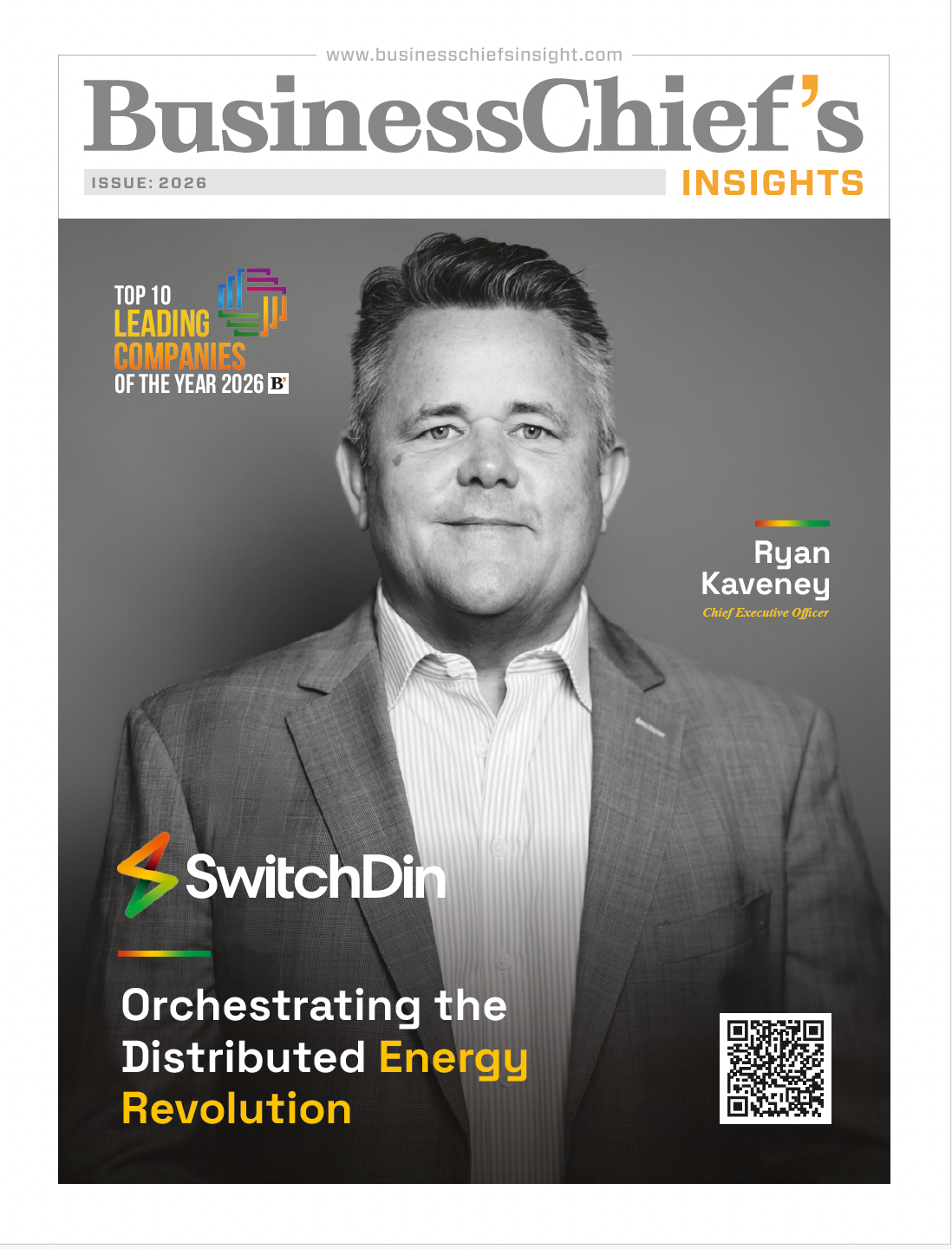
These questions were at the heart of a recent conversation between our CEO, Ryan Kaveney, and Business Chiefs Insight. Ryan reflected on SwitchDin’s evolution from device connectivity to distributed energy orchestration, and why the industry now needs to think beyond simply connecting more assets.
The conversation raises a broader question: what must effective DER orchestration deliver as the energy system becomes more distributed?
Connection is only the beginning
A connected energy asset can provide data. An orchestrated asset can respond to network conditions, site requirements, market signals and operational priorities as part of a wider portfolio.
This distinction becomes increasingly important as DER portfolios grow. Operators need to understand what assets are available, how they are performing and whether they are operating within relevant limits. They also need the ability to coordinate these assets without relying on separate software environments for every manufacturer or technology type.
SwitchDin’s Energy Management Solution brings together Edge Controller, DER Manager and Energy Optimiser capabilities. This allows customers to connect, monitor, manage and optimise assets across sites and portfolios without being locked into one equipment manufacturer. In other words, it moves customers from fragmented device management towards coordinated portfolio-level operation.
For distribution utilities, SwitchDin’s Utility Server, FlexGateway, provides a secure communications and control layer between DER fleets and existing operational systems.
Vendor choice should not come at the cost of control
Distributed energy projects often combine technologies from different suppliers. Equipment choices may also change over time as new technologies emerge, sites expand and commercial requirements evolve.
A vendor agnostic approach gives customers greater freedom to select appropriate equipment for each project without becoming dependent on a single technology ecosystem.
Interoperability also protects the long-term value of energy investments. A solar or battery project may operate for many years, during which network requirements, tariffs and market opportunities can change. An orchestration platform should allow the customer’s strategy to evolve without requiring every connected asset to be replaced.
For interconnected distribution utilities and energy operators, a common integration layer can also reduce the operational burden associated with managing a large and technically diverse DER fleet
Security is part of DER orchestration
As DER becomes more visible and controllable, the connection between field devices, cloud platforms and utility systems must be trusted. That means knowing which devices are communicating, protecting credentials and ensuring that information and control instructions cannot be altered or intercepted.
SwitchDin applies security across the technology stack, including encrypted communications, mutual authentication, protected device credentials and signed software updates. Our Public Key Infrastructure provides certificate and identity management for secure communication across distributed energy environments.
Cybersecurity cannot be added after thousands of assets have already been connected. It needs to be part of the architecture from the beginning.
Turning asset visibility into operational value
Better DER visibility is useful, but visibility alone does not deliver a return. Value comes from using asset data to make better decisions. Detailed telemetry can help operators identify performance issues, understand asset availability and make better operational decisions. When combined with forecasting, tariff information, market signals and site requirements, that visibility can support more intelligent asset dispatch.
For an asset owner, this may mean increasing solar self-consumption, reducing demand charges, responding to electricity prices or participating in energy markets. For a utility, it may mean maintaining operating limits, managing local network constraints and connecting more customer-owned solar and batteries without compromising reliability.
Project Symphony demonstrated this challenge in practice. The project brought together solar, batteries and controllable loads from multiple vendors. SwitchDin provided technology that supported communication between customer assets, Virtual Power Plant operators and the distribution network.
This demonstrates why distributed energy orchestration is not the same as operating a Virtual Power Plant. Orchestration provides the underlying technology and integration infrastructure that enables diverse assets, operators and market participants to work together.
That role will become more important as the number and variety of connected assets continue to grow.
The next stage of distributed energy
AEMO’s 2026 Integrated System Plan forecasts that consumers could have 87 GW of rooftop and other small-scale solar and 35 GW of supporting batteries by 2050. It also forecasts that electric vehicles could represent 80 per cent of vehicles in use by that time. Source: AEMO 2026 Integrated System Plan
The energy system is becoming more distributed. It is also becoming more dynamic and more dependent on digital infrastructure. Installing more assets will not be enough. Those assets need to work across manufacturers, respond to changing conditions and remain secure throughout their operating life.
At SwitchDin, our focus is making that possible.
Organisations planning a new DER project or expanding an existing portfolio can talk to the SwitchDin team about DER integration, compliance, energy management or orchestration.
We thank Business Chiefs Insight for featuring our work and sharing the SwitchDin story.
The original feature was published by Business Chiefs Insight. This article presents SwitchDin’s perspective on the industry themes discussed in that coverage.
