
The energy transition is accelerating, but not everyone is benefiting equally yet
Author: Ian Griffiths - Reflections from two days at Energy Networks Australia’s EN26 conference in Adelaide.
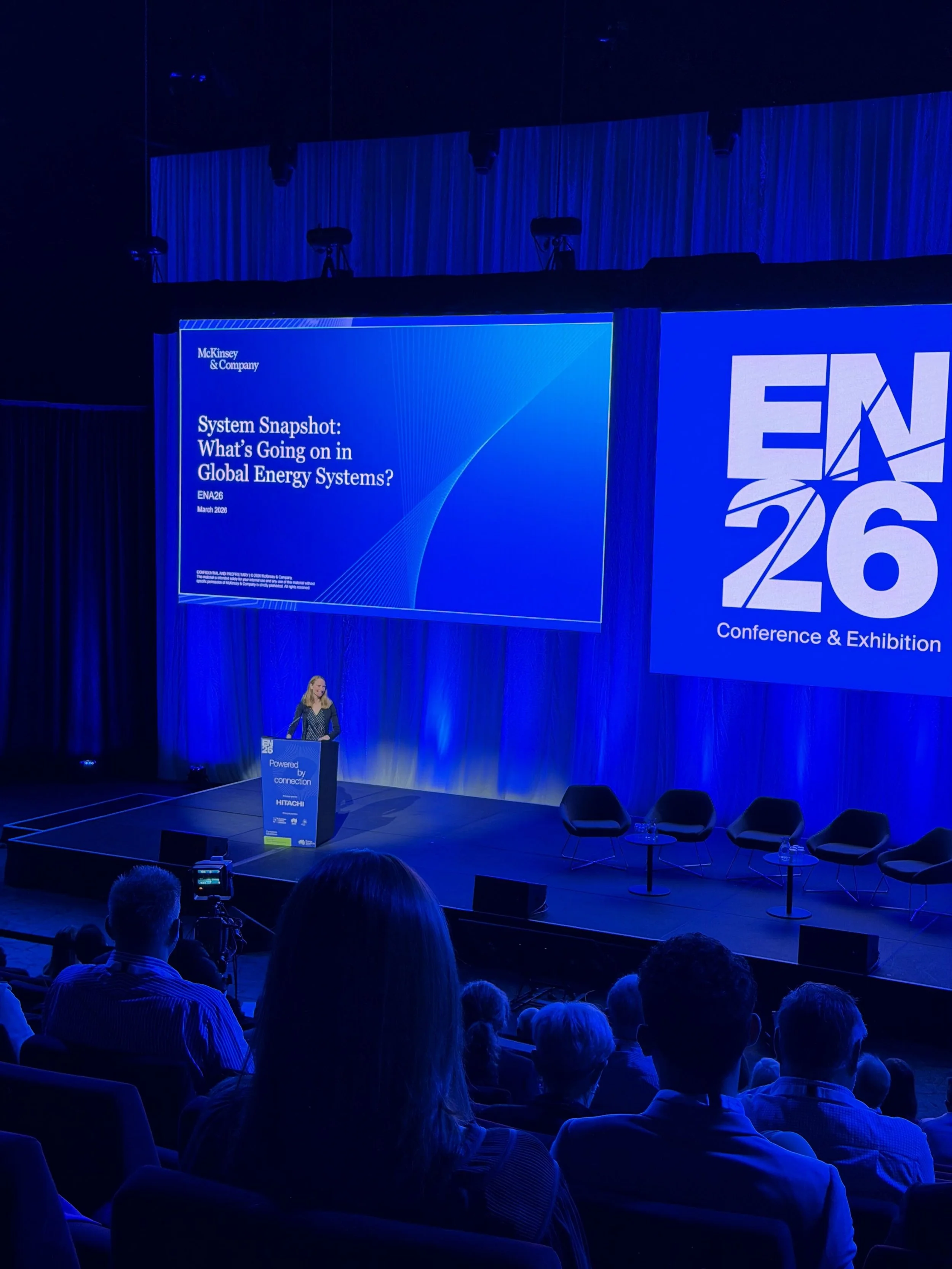
A couple of energising days at EN26 in Adelaide. I came back thinking about two things: the pace of change in energy, and the fact that the benefits of that change are still not equally distributed.
These aren't new observations. But sitting in a room with network operators, policymakers, engineers and researchers for two days has a way of making the abstract feel very concrete. The transition is happening. The question is whether the systems, incentives and organisations around it can keep up and make sure no one gets left behind.
There was a strong theme running through the conference: this is not just about building more. It's about coordinating better, thinking longer term, and adapting the grid for a world where more generation and storage sit behind the meter than ever before.
Learning by doing: Getting big things done
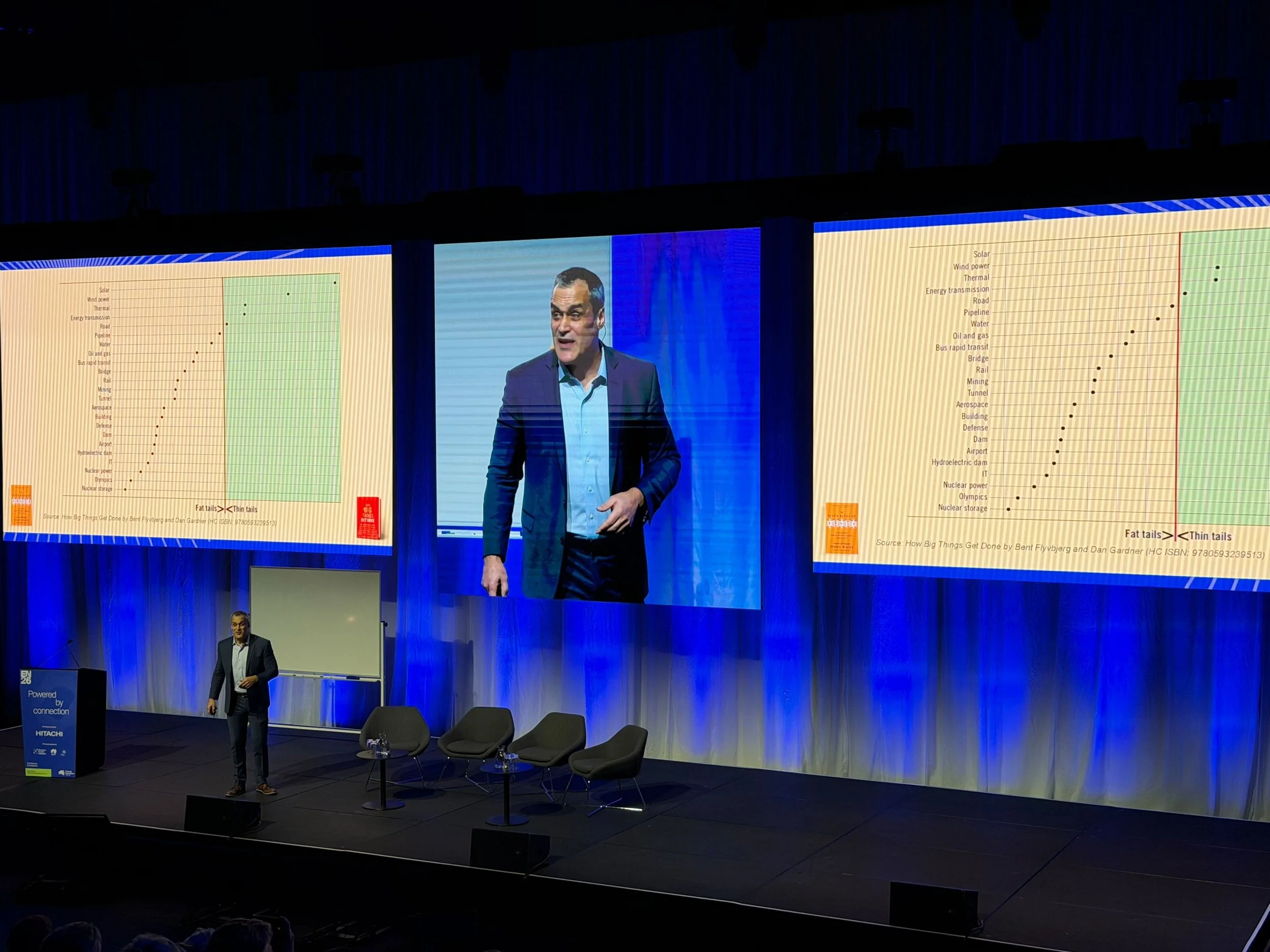
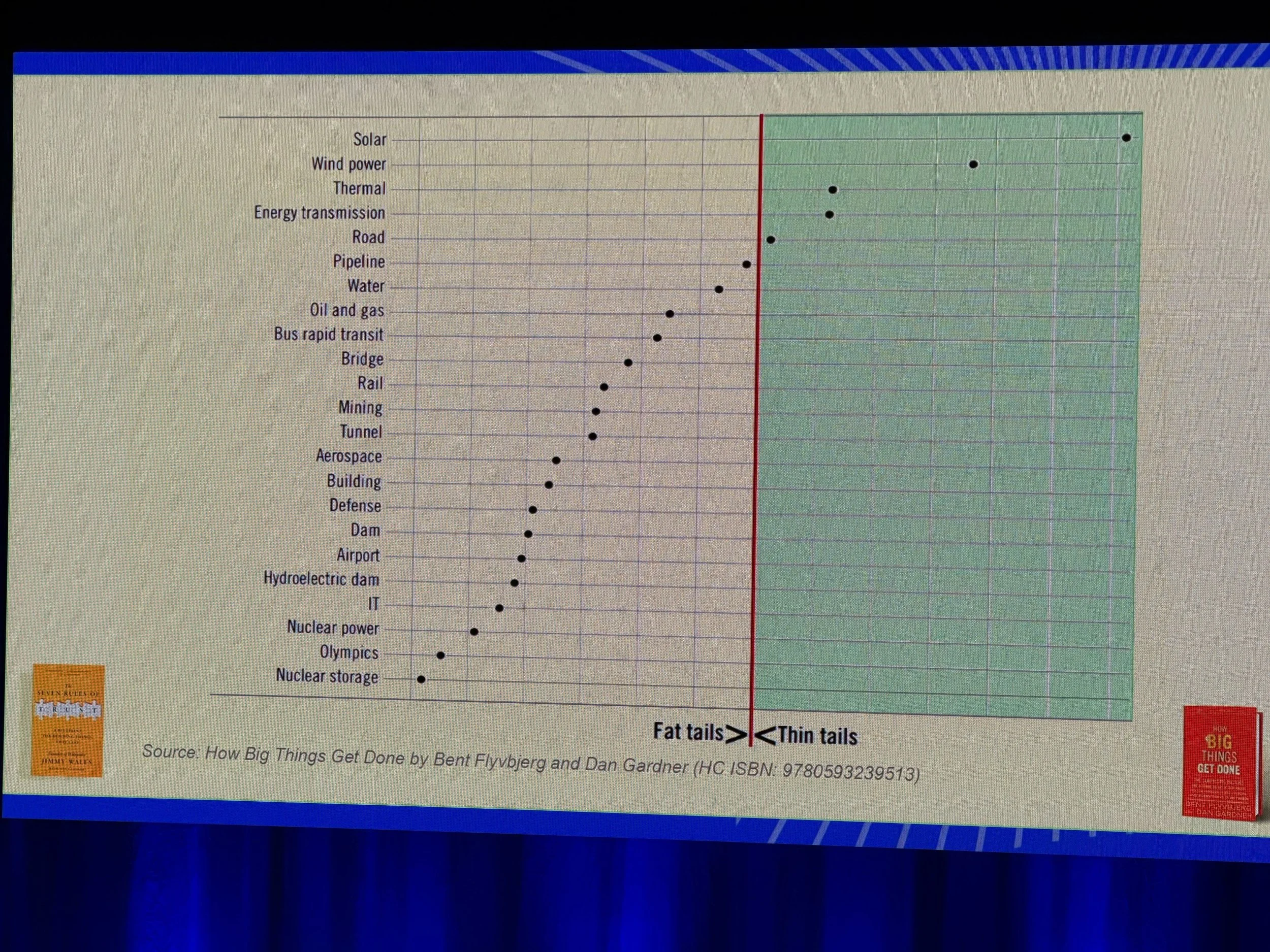
Dan Gardner opened with a lens that reframed a lot of what followed. His argument — drawn from the study of major infrastructure projects — is that the projects that actually succeed are the ones that benefit from modularity and self-similarity. They can be built in repeatable units, which means they climb the learning curve through experience rather than just planning.
Solar is the case study. The cost reductions that have made rooftop solar ubiquitous in Australia didn't come from a single breakthrough. They came from doing it, repeatedly, at scale, in ways that allowed each iteration to be cheaper and better than the last.
Nothing beats experiential learning. The projects that win are the ones designed to get smarter as they go.
It's a deceptively simple point, but a useful challenge to how we often think about energy transition — as though the right policy or the right technology will unlock progress in a single step. The evidence suggests otherwise.
Imagination as infrastructure
Dr Catherine Ball's session was harder to summarise — deliberately so. Her argument was about the role of imagination and creativity in breaking free from the constraints of established systems.
The energy system we have was designed for a different world: centralised generation, one-way flows, consumers who consume and generators who generate. The transition isn't just a technical challenge of adding more renewables to that system. It requires a different mental model of what the system is for, and who it serves.
You can't bring a new future into being if you're still inside the logic of the existing one.
That might sound philosophical for an engineering conference. But it's a practical point. The barriers to progress in energy aren't always technical or financial. Sometimes they're conceptual — and that's harder to fix with capital alone.
Unprecedented pace, insufficient speed: The global transition
Gracie Brown brought the global context. Energy systems worldwide are undergoing transformation at a pace that is, by historical standards, genuinely unprecedented. And it is still not happening fast enough to meet climate goals.
That tension of moving faster than ever, and not fast enough, sat uncomfortably in the room. It's not a contradiction so much as a measure of the scale of the challenge.
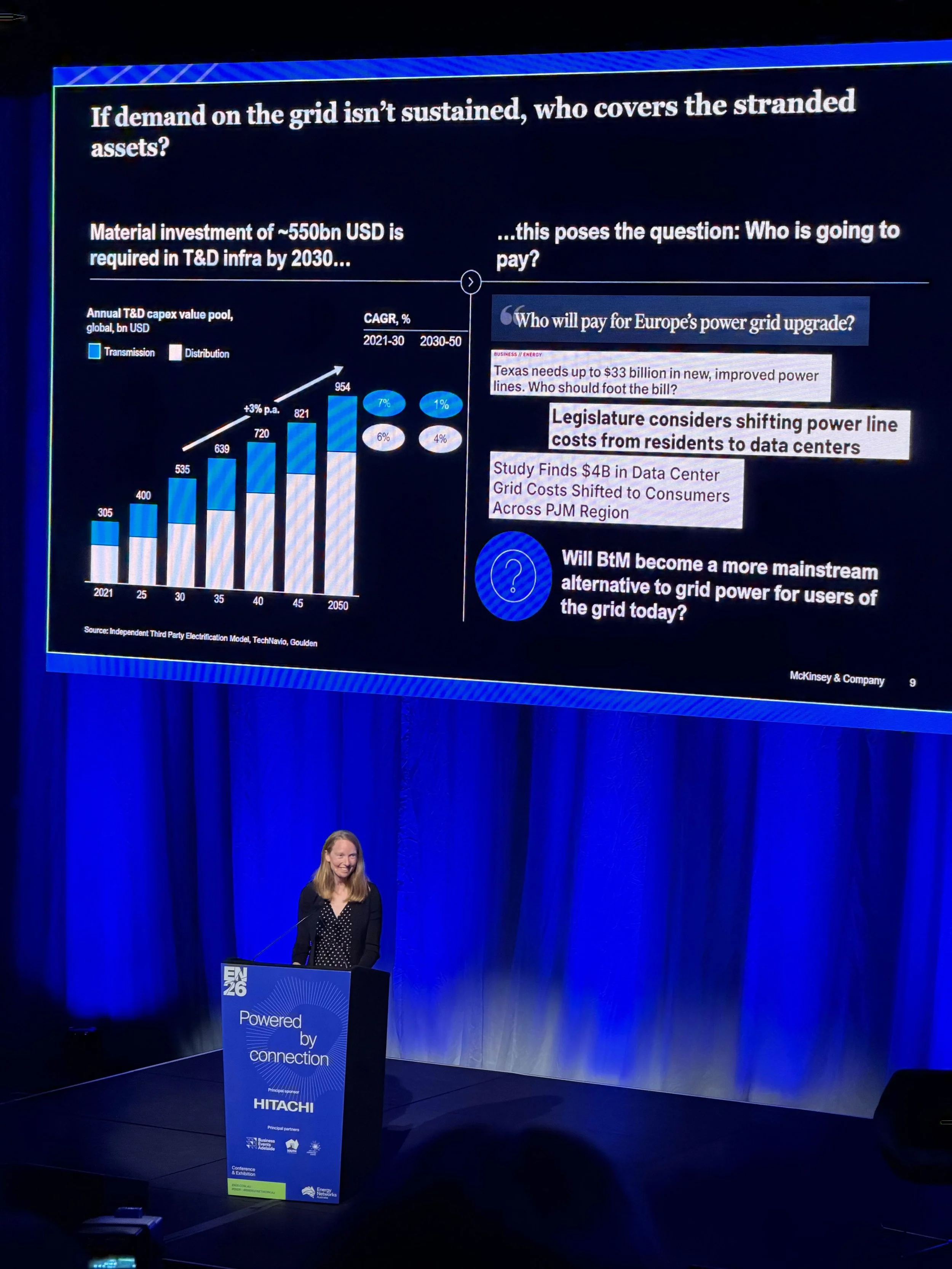
Brown made two observations that I keep returning to. The first is about time horizons. Network operators are, almost by definition, the longest-term thinkers in the energy system. They manage assets over decades — transformers, cables, substations which forces a planning horizon that extends well beyond the electoral cycles that shape most policy decisions. That's a structural advantage in a transition that requires sustained, multi-decade commitment.
Behind-the-meter opportunities could become a more mainstream alternative to the grid. Australian households might already be showing us what that looks like.
The second is about the nature of the problem itself. Successfully navigating the power system through this landscape isn't just an issue of capital deployment. It's a systems issue. It requires coordination across organisations and sectors that don't always share incentives, timelines, or even vocabulary.
Behind-the-meter storage: Power to the people, for real this time
Matt Kean's contribution was the most concrete data point of the conference, and probably the one that will stay with me longest.
Australia's Cheaper Home Batteries program has enabled more storage to be deployed behind the meter than the combined capacity of the country's largest 12 grid-scale battery projects. The majority of those batteries are paired with rooftop solar.
Let that land for a moment. The distributed, household-level energy storage in Australia now exceeds what the largest centralised battery projects have delivered and it arrived not through a single infrastructure program, but through millions of individual decisions by households to invest in their own energy security. As Kean put it:
"Power to the people is no longer a hippie mantra. It's a lived reality for many Australian households."
Which raises a genuinely interesting question that the conference didn't fully resolve: if households have their own generation and storage, how does the role of the interconnected grid change?
The question worth sitting with
The honest answer is that nobody knows exactly. But the shape of the answer matters enormously for how networks invest, how regulators think about pricing, and how the benefits of the transition get distributed.
Networks that can adapt, integrate distributed energy resources effectively, and treat households as participants in the system rather than passive consumers could unlock what Kean described as billions of dollars in potential benefits from effective DER and CER integration. It's the kind of challenge that SwitchDin works on directly — connecting, monitoring and optimising consumer energy resources for utilities and energy users at scale, so that the transition between centralised and distributed energy can actually work in practice.
Networks that can't risk becoming expensive infrastructure for the people who couldn't afford to opt out.
That's the equity dimension underneath everything else at EN26. The future is arriving. It's arriving for the households that could afford solar and batteries first. The question of whether it arrives for everyone else and how quickly, depends on decisions being made now, by the organisations in that room.
A final thought
Conferences like EN26 are useful not because they resolve hard questions — they rarely do — but because they put the right people in a room and force those questions to be asked out loud.
The transition is real. The urgency is real. And the work of making it fair is, as several speakers made clear, fundamentally a coordination challenge. That's both harder and more tractable than it sounds.

